Ever wondered what's really happening to your body while you sleep? You spend roughly a third of your life unconscious, yet the extraordinary processes unfolding inside you every night remain largely mysterious. Today, we're diving deep into five bizarre things your body does during sleep. These are phenomena that doctors rarely discuss but science has proven essential for your health.
1. Your Brain Literally Washes Itself
One of the most groundbreaking discoveries in sleep science is the glymphatic system. This is your brain's waste disposal service that operates exclusively during sleep.
How It Works:
Throughout the day, your brain cells generate metabolic waste, including beta-amyloid proteins linked to Alzheimer's disease. During sleep, particularly deep sleep, the spaces between brain cells expand by up to 60%, allowing cerebrospinal fluid to flow through like a cleansing tide, flushing out toxic waste products.
Why It Matters:
This nightly "brain wash" may be why chronic sleep deprivation increases dementia risk. Without adequate sleep, toxic proteins accumulate over time, potentially contributing to cognitive decline and neurological diseases.
Sleep Tip: Prioritize 7 to 9 hours of quality sleep to give your brain sufficient time for this crucial cleaning process.
2. You Become Completely Paralyzed (And That's a Good Thing)
During REM (Rapid Eye Movement) sleep, your body implements a safety mechanism: temporary paralysis.
The Science Behind REM Atonia:
Your brainstem sends inhibitory signals down your spinal cord, disconnecting motor neurons and paralyzing skeletal muscles. Only your eye muscles, breathing muscles, and heart remain active. This prevents you from physically acting out your dreams. Imagine running in your dream and sprinting across your bedroom in reality!
When It Goes Wrong:
Sleep paralysis occurs when you wake before the paralysis wears off
REM sleep behavior disorder happens when this system fails, causing people to act out dreams
Health Insight: This paralysis is completely normal and protects you from injury during vivid dreams.
3. Your Body Temperature Drops Significantly
Your core body temperature decreases by 1 to 2 degrees Fahrenheit every night, typically reaching its lowest point around 2 to 3 AM.
Why Temperature Matters for Sleep Quality:
Temperature drop signals your body to initiate sleep
Prevents proper cooling = fragmented sleep and fewer deep sleep cycles
Ideal bedroom temperature: 60 to 67°F (15 to 19°C)
Pro Sleep Hack: Take a warm bath 60 to 90 minutes before bed. When you exit, your body rapidly dissipates heat, mimicking the natural temperature drop that triggers sleepiness.
Science-Based Solution: Cooling devices and temperature-regulating mattresses are showing promise as insomnia treatments by optimizing this natural temperature regulation.
4. Growth Hormone Surges Through Your System
While you sleep peacefully, your body works overtime on repair and regeneration, thanks to growth hormone.
The Sleep-Growth Hormone Connection:
60 to 70% of daily growth hormone secretion occurs during sleep
Most significant pulse happens within the first 1 to 2 hours after falling asleep
Released primarily during slow-wave (deep) sleep
What Growth Hormone Does:
Repairs and builds muscle tissue
Strengthens bones
Regulates metabolism
Supports cognitive function
Drives physical growth in children and teenagers
For Athletes and Fitness Enthusiasts: No amount of training or nutrition can compensate for inadequate sleep when it comes to muscle recovery and growth. Your body literally does most of its repair work while you sleep.
Age Factor: As we age, we spend less time in deep sleep, and growth hormone levels decline. This potentially contributes to age-related muscle loss, increased body fat, and decreased bone density.
5. Your Eyes Move Rapidly (But Not Randomly)
The phenomenon that gives REM sleep its name (rapid eye movement) is far more sophisticated than scientists initially thought.
What Recent Research Reveals:
Those rapid eye movements darting beneath your closed eyelids aren't random. They're coordinated with your dream content, essentially scanning the virtual dream world just as your eyes scan the real world when awake.
Dream-Eye Movement Connection:
Watching a tennis match in a dream = horizontal eye movements
Climbing stairs in a dream = vertical eye movements
Your visual and motor brain systems remain active during REM
Why REM Sleep Matters:
Emotional processing and regulation
Memory consolidation, especially procedural learning
Creativity and problem-solving
Processing daily experiences
Famous Examples: Countless artists, scientists, and inventors have credited dreams with breakthrough insights, from Paul McCartney's "Yesterday" to Dmitri Mendeleev's periodic table.
What Happens When You Miss Just One Night of Sleep?
Understanding these processes makes the consequences of sleep deprivation even clearer:
After 24 Hours Without Sleep:
Cognitive performance drops to levels comparable to being legally drunk
Reaction times slow significantly
Attention and decision-making become severely impaired
Emotional regulation suffers (amygdala becomes 60% more reactive)
Physical coordination worsens
Injury risk increases dramatically
Chronic Sleep Deprivation Consequences:
Increased risk of obesity and type 2 diabetes
Higher cardiovascular disease risk
Weakened immune system
Greater likelihood of neurodegenerative diseases
Shortened lifespan
How to Optimize Your Sleep for Maximum Health Benefits
Now that you understand what your body does during sleep, here's how to support these crucial processes:
1. Maintain Consistent Sleep Schedule
Go to bed and wake up at the same time daily
Helps regulate circadian rhythm and optimize all sleep processes
2. Create Optimal Sleep Environment
Keep bedroom cool (60 to 67°F)
Ensure complete darkness
Minimize noise or use white noise
3. Prioritize Sleep Duration
Adults: 7 to 9 hours
Teenagers: 8 to 10 hours
School-age children: 9 to 12 hours
4. Support Your Glymphatic System
Get sufficient deep sleep
Sleep on your side (research suggests this position enhances brain waste clearance)
Stay hydrated
5. Protect Your REM Sleep
Avoid alcohol before bed (suppresses REM)
Don't use stimulants late in the day
Allow full sleep cycles to complete
Conclusion: Sleep Is Active Recovery, Not Passive Downtime
Sleep isn't wasted time. It's when your body performs essential maintenance that cannot happen while you're awake. Your brain cleanses itself of toxins, your muscles are safely paralyzed to protect you, your body temperature optimizes for rest, growth hormones flood your system for repair, and your eyes track dream landscapes while processing emotions and memories.
Every one of these processes is necessary for physical health, cognitive function, and emotional well-being. When you prioritize sleep, you're investing in your brain health, physical recovery, emotional resilience, and longevity.
Tonight, when you climb into bed, remember: you're not just sleeping. You're giving your body the chance to perform some of its most important work.
Your future self will thank you for those solid 7 to 9 hours of rest.
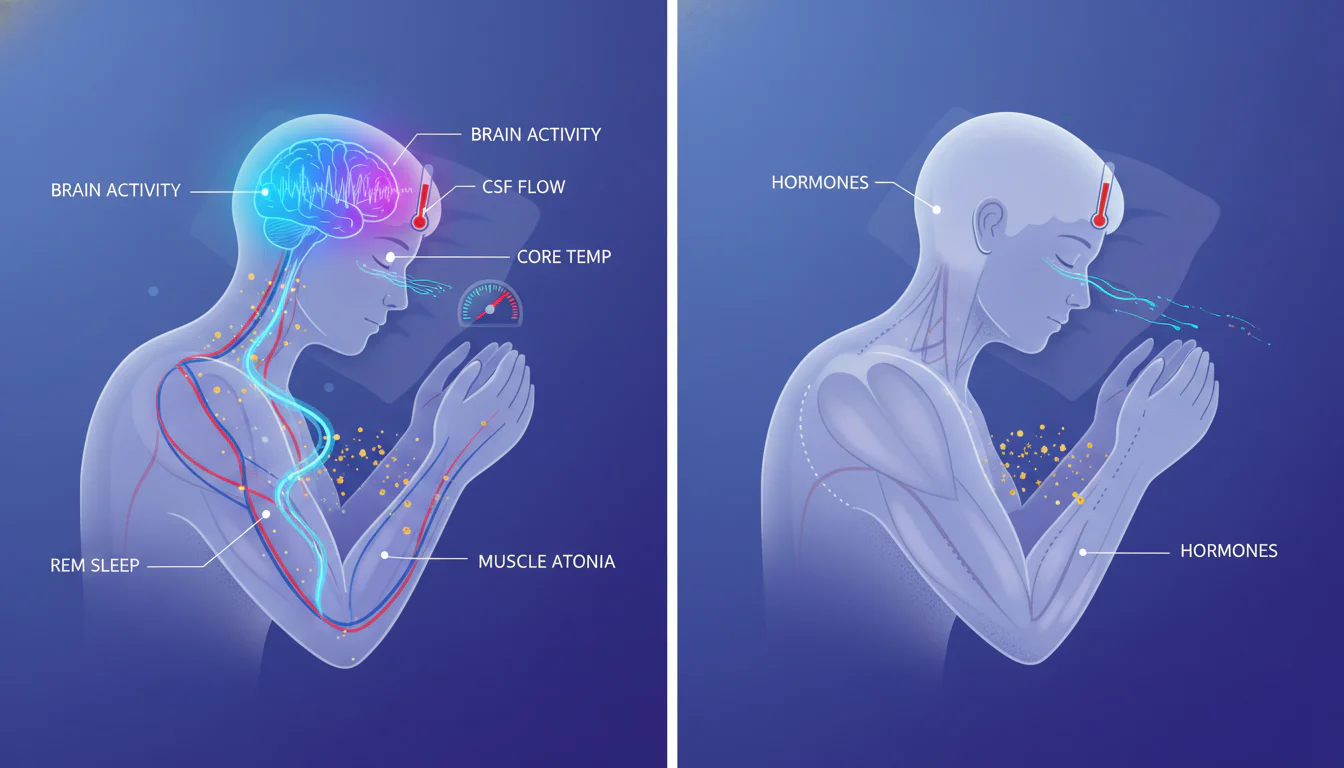
Ever wondered what's really happening to your body while you sleep? You spend roughly a third of your life unconscious, yet the extraordinary processes unfolding inside you every night remain largely mysterious. Today, we're diving deep into five bizarre things your body does during sleep. These are phenomena that doctors rarely discuss but science has proven essential for your health.
1. Your Brain Literally Washes Itself
One of the most groundbreaking discoveries in sleep science is the glymphatic system. This is your brain's waste disposal service that operates exclusively during sleep.
How It Works: Throughout the day, your brain cells generate metabolic waste, including beta-amyloid proteins linked to Alzheimer's disease. During sleep, particularly deep sleep, the spaces between brain cells expand by up to 60%, allowing cerebrospinal fluid to flow through like a cleansing tide, flushing out toxic waste products.
Why It Matters: This nightly "brain wash" may be why chronic sleep deprivation increases dementia risk. Without adequate sleep, toxic proteins accumulate over time, potentially contributing to cognitive decline and neurological diseases.
Sleep Tip: Prioritize 7 to 9 hours of quality sleep to give your brain sufficient time for this crucial cleaning process.
2. You Become Completely Paralyzed (And That's a Good Thing)
During REM (Rapid Eye Movement) sleep, your body implements a safety mechanism: temporary paralysis.
The Science Behind REM Atonia: Your brainstem sends inhibitory signals down your spinal cord, disconnecting motor neurons and paralyzing skeletal muscles. Only your eye muscles, breathing muscles, and heart remain active. This prevents you from physically acting out your dreams. Imagine running in your dream and sprinting across your bedroom in reality!
When It Goes Wrong:
Health Insight: This paralysis is completely normal and protects you from injury during vivid dreams.
3. Your Body Temperature Drops Significantly
Your core body temperature decreases by 1 to 2 degrees Fahrenheit every night, typically reaching its lowest point around 2 to 3 AM.
Why Temperature Matters for Sleep Quality:
Pro Sleep Hack: Take a warm bath 60 to 90 minutes before bed. When you exit, your body rapidly dissipates heat, mimicking the natural temperature drop that triggers sleepiness.
Science-Based Solution: Cooling devices and temperature-regulating mattresses are showing promise as insomnia treatments by optimizing this natural temperature regulation.
4. Growth Hormone Surges Through Your System
While you sleep peacefully, your body works overtime on repair and regeneration, thanks to growth hormone.
The Sleep-Growth Hormone Connection:
What Growth Hormone Does:
For Athletes and Fitness Enthusiasts: No amount of training or nutrition can compensate for inadequate sleep when it comes to muscle recovery and growth. Your body literally does most of its repair work while you sleep.
Age Factor: As we age, we spend less time in deep sleep, and growth hormone levels decline. This potentially contributes to age-related muscle loss, increased body fat, and decreased bone density.
5. Your Eyes Move Rapidly (But Not Randomly)
The phenomenon that gives REM sleep its name (rapid eye movement) is far more sophisticated than scientists initially thought.
What Recent Research Reveals: Those rapid eye movements darting beneath your closed eyelids aren't random. They're coordinated with your dream content, essentially scanning the virtual dream world just as your eyes scan the real world when awake.
Dream-Eye Movement Connection:
Why REM Sleep Matters:
Famous Examples: Countless artists, scientists, and inventors have credited dreams with breakthrough insights, from Paul McCartney's "Yesterday" to Dmitri Mendeleev's periodic table.
What Happens When You Miss Just One Night of Sleep?
Understanding these processes makes the consequences of sleep deprivation even clearer:
After 24 Hours Without Sleep:
Chronic Sleep Deprivation Consequences:
How to Optimize Your Sleep for Maximum Health Benefits
Now that you understand what your body does during sleep, here's how to support these crucial processes:
1. Maintain Consistent Sleep Schedule
2. Create Optimal Sleep Environment
3. Prioritize Sleep Duration
4. Support Your Glymphatic System
5. Protect Your REM Sleep
Conclusion: Sleep Is Active Recovery, Not Passive Downtime
Sleep isn't wasted time. It's when your body performs essential maintenance that cannot happen while you're awake. Your brain cleanses itself of toxins, your muscles are safely paralyzed to protect you, your body temperature optimizes for rest, growth hormones flood your system for repair, and your eyes track dream landscapes while processing emotions and memories.
Every one of these processes is necessary for physical health, cognitive function, and emotional well-being. When you prioritize sleep, you're investing in your brain health, physical recovery, emotional resilience, and longevity.
Tonight, when you climb into bed, remember: you're not just sleeping. You're giving your body the chance to perform some of its most important work.
Your future self will thank you for those solid 7 to 9 hours of rest.